
Your First Month on Tirzepatide in Florida: What to Expect
A practical guide to the first four weeks on compounded tirzepatide: dosing, common side effects, birth control, and when to call your provider.
Your first month on tirzepatide is when most questions come up: How will I feel after the first shot? Which side effects are normal? When does the dose go up? If you're an adult in Florida considering compounded tirzepatide for weight loss, knowing what the first four weeks usually involve can make starting feel calmer and more manageable.
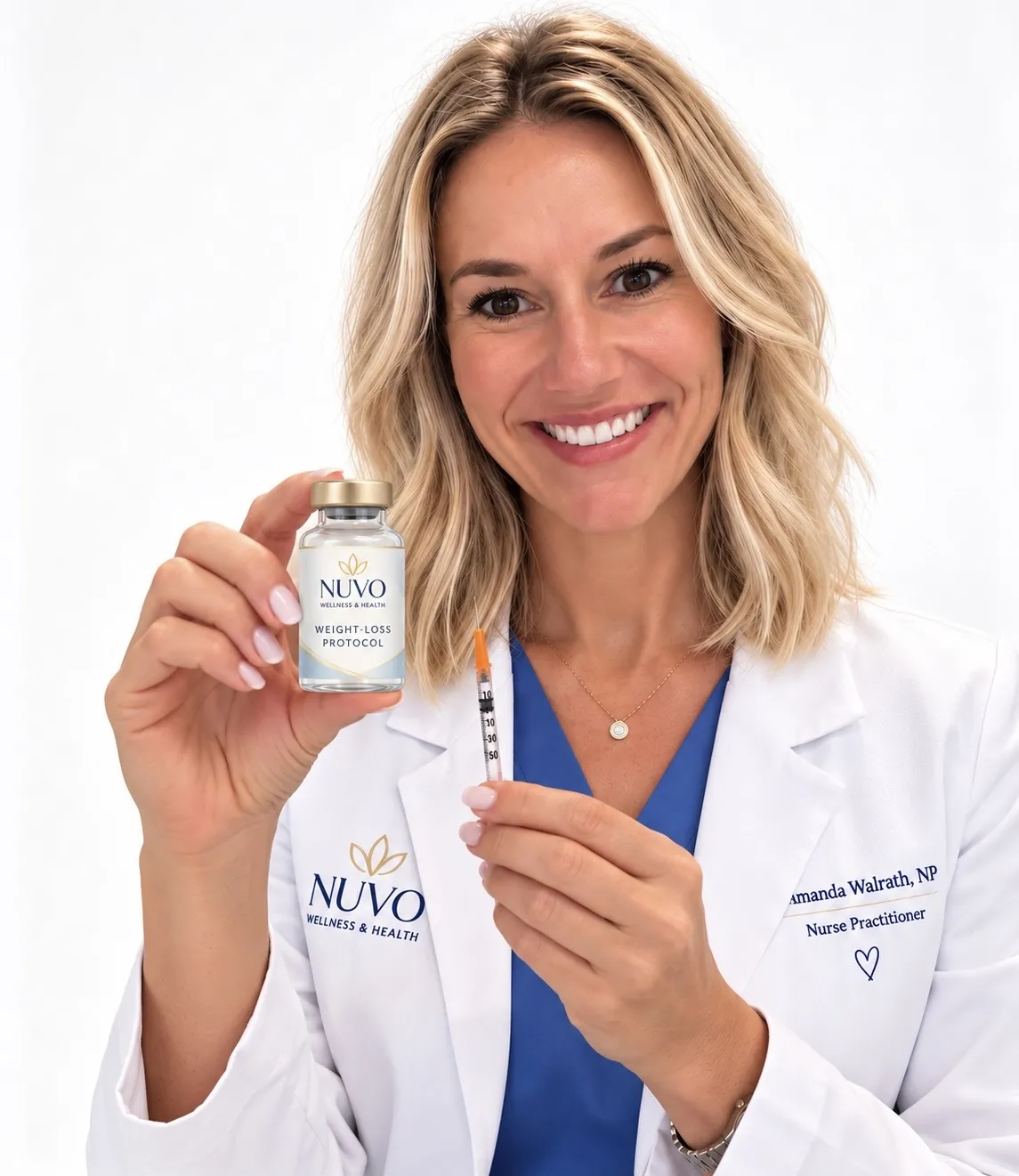
I'm Amanda Walrath, APRN, FNP-BC, a Florida-licensed, board-certified family nurse practitioner with 17 years of clinical experience and the founder of Nuvo Wellness and Health in Stuart. I started Nuvo after my own weight-loss struggle after having kids, and I've taken the same medication I offer my patients, so I try to answer first-month questions honestly and practically.
How tirzepatide is different from semaglutide
Tirzepatide acts on two hormone pathways, GIP and GLP-1, while semaglutide acts on GLP-1 alone. Both are once-weekly injections that can reduce appetite and help you feel full sooner. Your dose amounts, syringe units and schedule won't match a friend's semaglutide plan, so it's best not to compare side by side.
Compounded tirzepatide is not FDA-approved. The FDA does not review compounded medications for safety, effectiveness or quality before they're dispensed, and compounded tirzepatide is not the same as, or a generic version of, Mounjaro or Zepbound. Whether it's appropriate for you is decided by a clinical evaluation, not by an online form alone.
Before your first tirzepatide dose
The first step is always a clinical evaluation. Your provider reviews your health history, current medications, goals and anything that could make treatment unsafe. Be sure to bring up the following, because they need to be discussed with a provider and may mean tirzepatide isn't an option:
Once a prescription is written, allow 5 to 7 days for the pharmacy to prepare and ship your medication. It arrives overnight by FedEx in cold packaging; refrigerate it as soon as it arrives. Nuvo's GLP-1 Patient Guide covers storage, supplies and injection technique in more detail.
Tirzepatide dosing in the first month
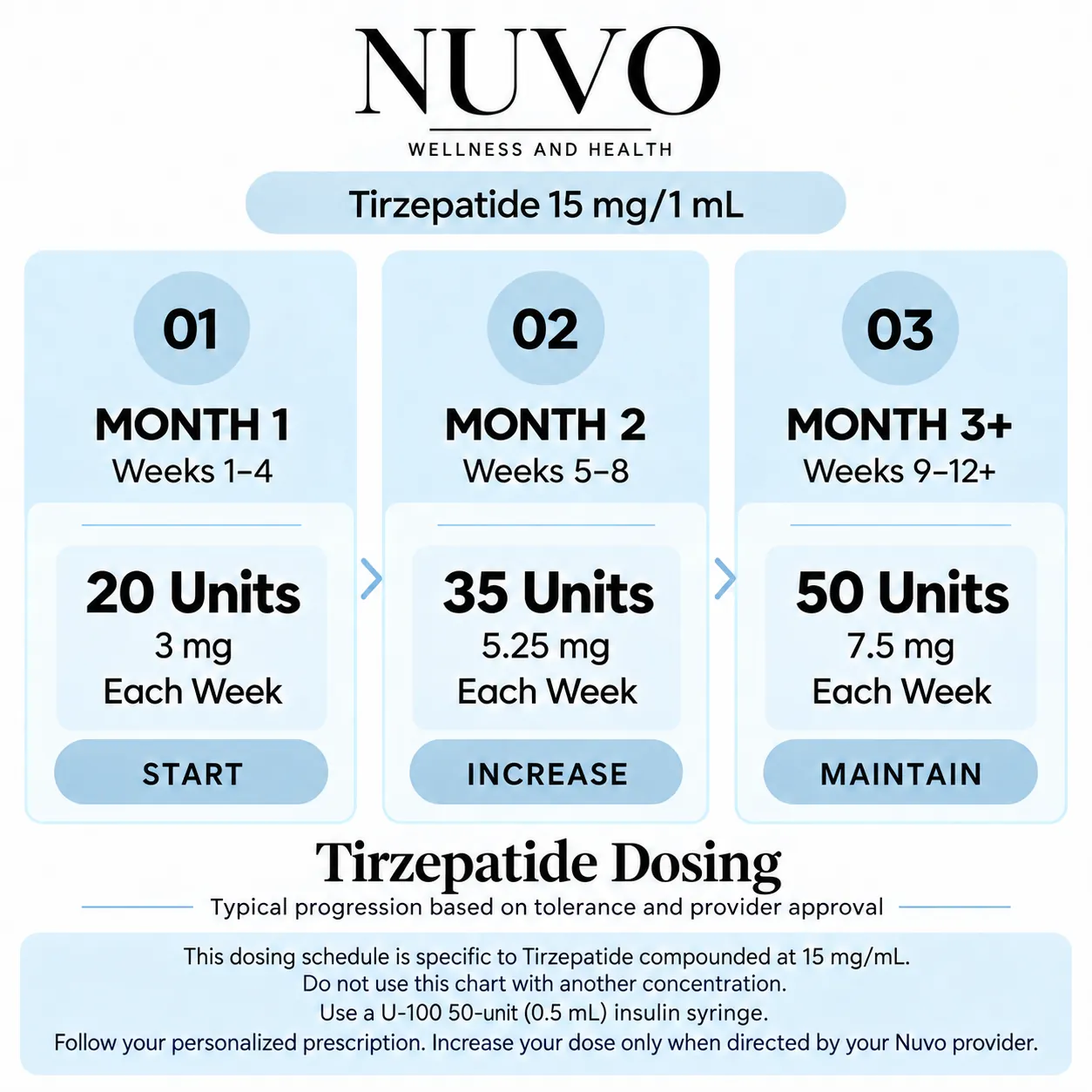
Tirzepatide is injected once a week, on the same day each week. It's started at a low dose, and increases are typically made no sooner than every four weeks, based on how you're tolerating it. That slow, step-by-step approach is one of the main ways to keep side effects manageable. Your dose only goes up when your provider directs it.
Nuvo's compounded tirzepatide is 15 mg/mL, measured with a 50-unit (0.5 mL) U-100 syringe. For reference only, here is how a few doses translate to syringe units at that concentration. Always follow the exact dose your provider prescribes:
Week by week: what the first month on tirzepatide can look like
Everyone's experience is different, but this is a general picture of how the first four weeks often unfold:
The low starting dose is meant to help your body adjust, not to produce dramatic changes. Individual results vary, and how the first month goes doesn't predict your overall results.
Common tirzepatide side effects and how to ease them
The most common side effects involve digestion and tend to be strongest after starting or increasing a dose. They include nausea, diarrhea, constipation, vomiting, stomach discomfort, indigestion, burping, decreased appetite, fatigue and mild redness or itching at the injection site. Habits that often help:
Birth control and other first-month considerations
This is one of the most overlooked parts of starting tirzepatide. According to the FDA-approved prescribing information for tirzepatide, it can make birth control pills taken by mouth less effective. The label advises people using oral contraceptives to switch to a non-oral method, or add a barrier method such as condoms, for 4 weeks after starting and for 4 weeks after each dose increase. Talk with your provider about what makes sense for you.
When to call your provider or seek urgent care
Contact your provider right away, or seek urgent or emergency care, if you have:
In an emergency, call 911.
How to get started with Nuvo
Nuvo Wellness and Health is a Florida-only practice based at 1 SE Ocean Blvd in Stuart, with telehealth visits for adults anywhere in Florida and in-person visits in Stuart. Here's how it works:
Care is cash-pay with no monthly membership. Compounded tirzepatide (15 mg/mL) is $500 per 4 mL (60 mg) vial, and compounded semaglutide (2.5 mg/mL) is $400 per 4 mL (10 mg) vial. Each vial lasts about 12 weeks depending on your dose and includes medication, supplies, shipping and ongoing follow-up. Call or text (772) 210-4649 or book at nuvowellnessandhealth.janeapp.com.
Frequently asked questions
This article is for educational purposes and is not medical advice. Compounded medications are not FDA-approved. Prescriptions are issued only after a medical evaluation determines treatment is appropriate. Individual results vary.