Alcohol on GLP-1 Medication: What Florida Patients on Semaglutide or Tirzepatide Should Know
How alcohol can affect nausea, hydration, blood sugar and your goals on GLP-1 medication, plus practical tips for social events in Florida.
 Looking for medical weight loss in Stuart, FL? Get clinician-guided GLP-1 care by telehealth across Florida, starting with a free consult.See the program →
Alcohol on GLP-1 medication is one of the most common questions I hear from patients starting compounded semaglutide or tirzepatide. Between boat days, beach weddings and holiday parties, Florida life comes with plenty of invitations, and it's reasonable to want to know whether a glass of wine or a cocktail fits into your plan, and what to watch for if it does.
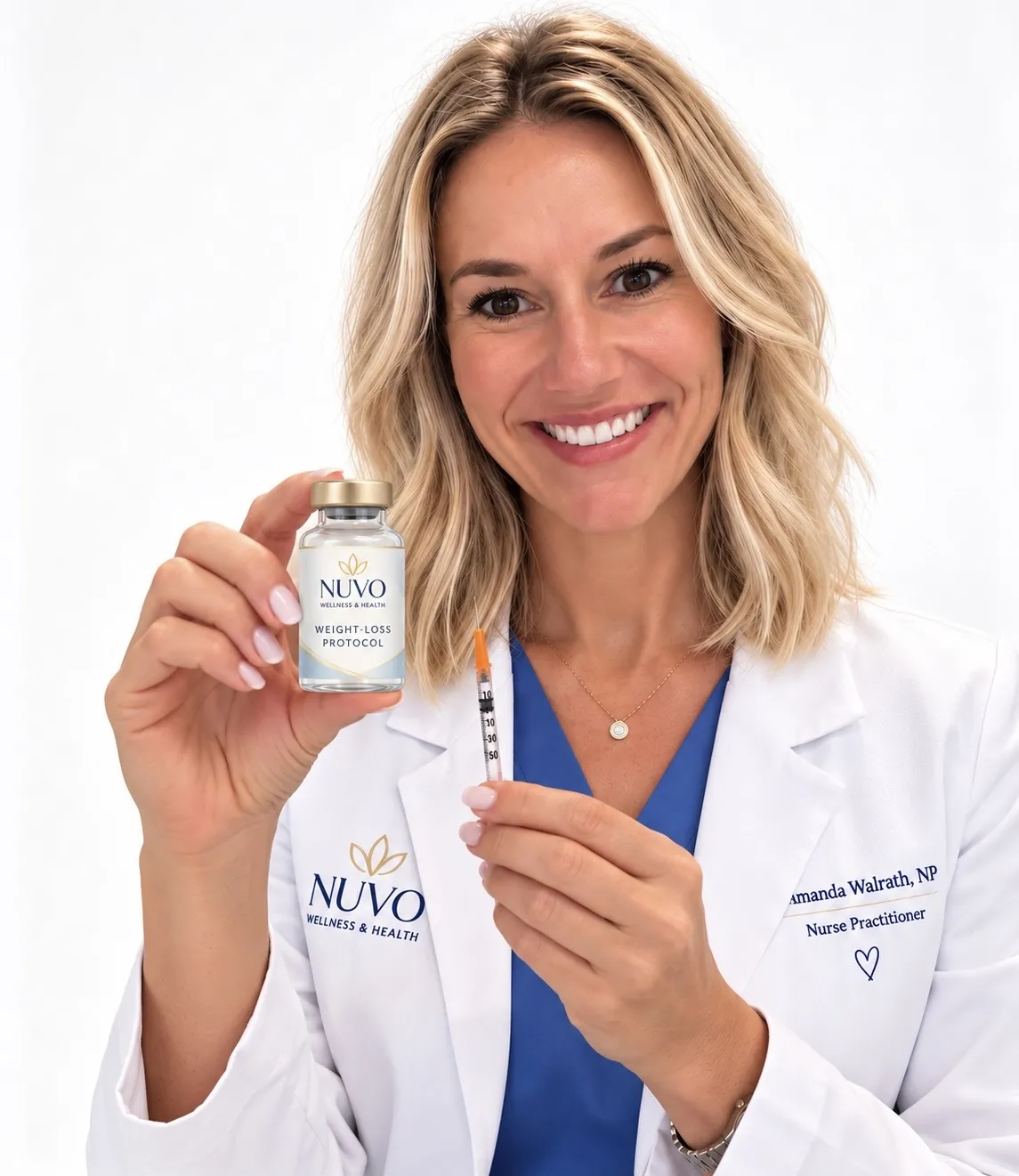
I'm Amanda Walrath, APRN, FNP-BC, a Florida-licensed, board-certified family nurse practitioner with 17 years of clinical experience and the founder of Nuvo Wellness and Health in Stuart. I started Nuvo after my own weight-loss struggle after having kids, and I've taken the same medication I offer my patients. My goal here is to give you honest, practical information so you can make informed choices and have a better conversation with your provider.
Can you drink alcohol on GLP-1 medication?
There isn't a single answer that fits everyone. For some adults, an occasional drink may be acceptable after talking it through with their provider. For others, alcohol is a poor fit because of their health history, other medications or how they're feeling on treatment. That's why I talk about alcohol during the clinical evaluation instead of giving a blanket yes or no.
How alcohol can affect you on semaglutide or tirzepatide
These are the main areas I review with patients who drink, even occasionally:
Because you may be eating smaller portions, drinking on a near-empty stomach is more likely than it used to be. That can make alcohol hit faster and can make nausea worse. Plan to eat something with protein first, and never drive or get on the water after drinking.
Practical tips if you choose to drink on GLP-1 medication
If your provider has said an occasional drink is reasonable for you, these habits can make it easier on your body:
Nuvo's GLP-1 Patient Guide has more on managing nausea, hydration and when to call, and it's a good companion to this article.
Planning ahead for social events, holidays and travel
South Florida's busy season brings a lot of gatherings, and you don't have to sit them out. Decide before you go whether you'll drink, have a go-to alternative ready such as sparkling water with lime, and make sure there's a protein-forward option to eat. If you're traveling, keep your medication refrigerated and plan your weekly injection before you leave.
When to call your provider or seek urgent care
Call or text Nuvo if side effects are getting in the way of eating or drinking fluids, or if you're unsure whether alcohol is safe with your other medications. Seek urgent or emergency care right away for severe stomach pain that won't go away (with or without vomiting, sometimes spreading to the back), signs of significant dehydration such as dizziness, very little urine or confusion, symptoms of low blood sugar such as shakiness, sweating or confusion that don't improve, or signs of a serious allergic reaction.
Also make sure your provider knows if you have a personal or family history of medullary thyroid cancer or MEN2, a history of pancreatitis, gallbladder problems or kidney disease, or if you are pregnant, planning a pregnancy or breastfeeding.
How to get started with Nuvo
If you're an adult in Florida thinking about GLP-1 medication and have questions about alcohol, your routine or your health history, here's how it works:
Compounded semaglutide (2.5 mg/mL) is $400 per 4 mL (10 mg) vial, and compounded tirzepatide (15 mg/mL) is $500 per 4 mL (60 mg) vial. Each vial lasts about 12 weeks depending on your dose, and medication, supplies, shipping and ongoing follow-up are included.
Alcohol and GLP-1 medication: FAQs
This article is for educational purposes and is not medical advice. Compounded medications are not FDA-approved. Prescriptions are issued only after a medical evaluation determines treatment is appropriate. Individual results vary.