Protein and Hydration on GLP-1 Medication in Jupiter, FL
Practical protein and hydration tips for Jupiter, FL adults on semaglutide or tirzepatide, including Florida heat and when to call your provider.
If you're taking a GLP-1 medication in Jupiter, FL, or thinking about starting one, two everyday habits deserve more attention than they usually get: eating enough protein and staying hydrated. Medications like compounded semaglutide and compounded tirzepatide often turn down appetite, which can make it surprisingly easy to under-eat protein and under-drink fluids. Add South Florida heat, time on the water and long days outdoors, and hydration becomes even more important.
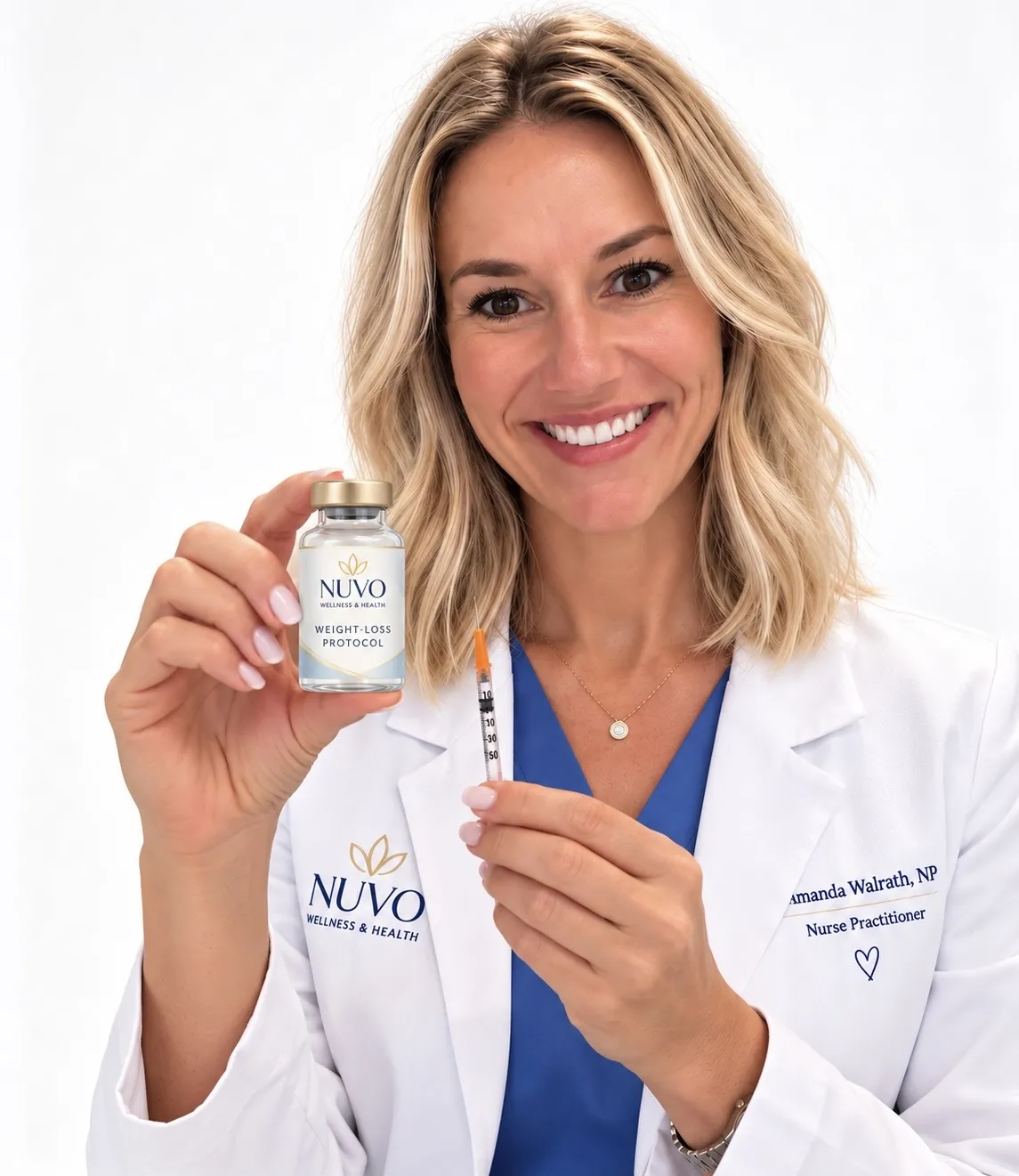
I'm Amanda Walrath, APRN, FNP-BC, a Florida-licensed, board-certified family nurse practitioner with 17 years of clinical experience and the founder of Nuvo Wellness and Health. I started Nuvo after my own weight-loss struggle after having kids, and I've taken the same medication I offer. Protein and fluids were two of the things I had to be intentional about myself, so I want to share what I talk through with patients.
Why protein matters more when your appetite drops
GLP-1 medications can help you feel full sooner and stay full longer. That can be helpful, but when you're eating less overall, the quality of what you do eat matters more. Protein supports fullness and helps your body maintain muscle while you lose weight. Losing some lean mass along with fat is common during weight loss, and adequate protein combined with strength training is one of the main ways to help protect it.
In 2025, the American College of Lifestyle Medicine, the American Society for Nutrition, the Obesity Medicine Association and The Obesity Society published a joint advisory on nutrition for people on GLP-1 therapy. Among its priorities: adequate protein intake and strength training to preserve lean mass, nutrient-dense and minimally processed foods, and preventing micronutrient deficiencies.
How much protein you need depends on your body size, kidney function, activity level and other health conditions, so it's best set with your provider or a registered dietitian rather than copied from a social media post. If you have kidney disease, talk with your provider before increasing protein significantly.
Practical ways to get enough protein
When your appetite is smaller, a few simple habits can make a real difference:
Hydration in Florida heat while on a GLP-1
Many people on GLP-1 medications notice they're less thirsty, or they forget to drink because they're simply eating and snacking less. If you're also dealing with side effects like nausea, vomiting or diarrhea, you can lose fluid faster than you realize.
Dehydration matters because it can affect your kidneys. Kidney problems, sometimes linked to dehydration from vomiting or diarrhea, are listed among the warnings for this class of medication. In Jupiter, where summer heat and humidity can last well into fall, a day at the beach, on a boat or working in the yard adds extra fluid loss through sweat.
A simple day of eating and drinking to start from
This isn't a prescribed meal plan, just an example of how protein and fluids can fit into a lower-appetite day. Adjust portions to your hunger and your provider's guidance.
Side effects that affect eating and drinking, and when to call
The most common side effects of GLP-1 medications are digestive: nausea, decreased appetite, constipation, diarrhea, heartburn and vomiting. They're often most noticeable when starting or after a dose increase. Smaller meals, eating slowly, stopping when you feel full and steady fluids can help. Fiber from vegetables, fruit and whole grains, along with enough water, can also help with constipation. Tell your provider if side effects make it hard to keep food or fluids down.
These medications are also not appropriate for everyone. A personal or family history of medullary thyroid carcinoma or Multiple Endocrine Neoplasia syndrome type 2 (MEN 2), pregnancy or planning pregnancy, and a history of pancreatitis, gallbladder disease or kidney problems all need to be discussed with your provider. Compounded semaglutide and compounded tirzepatide are not FDA-approved, and they are not the same as, equivalent to, or generic versions of Ozempic, Wegovy, Mounjaro or Zepbound. Whether treatment is right for you is decided only after a clinical evaluation.
How to get started with Nuvo
Nuvo Wellness and Health is a Florida-only telehealth practice based in Stuart, just up the road from Jupiter, and we serve adults throughout Florida. Here's how it works:
Care is cash-pay at $400 per fill, which includes the consultation, shipping, supplies and follow-up. There is no monthly membership. Hours are Monday through Friday 9 to 5 and Saturday 10 to 2. You can also email nuvowellnessandhealth@gmail.com with questions.
This article is for educational purposes and is not medical advice. Compounded medications are not FDA-approved. Prescriptions are issued only after a medical evaluation determines treatment is appropriate. Individual results vary.