
GLP-1 Medication Before Surgery or a Procedure: What Florida Patients Should Know
Why semaglutide and tirzepatide matter before anesthesia or sedation, who to tell, and how to plan ahead so your procedure goes smoothly.
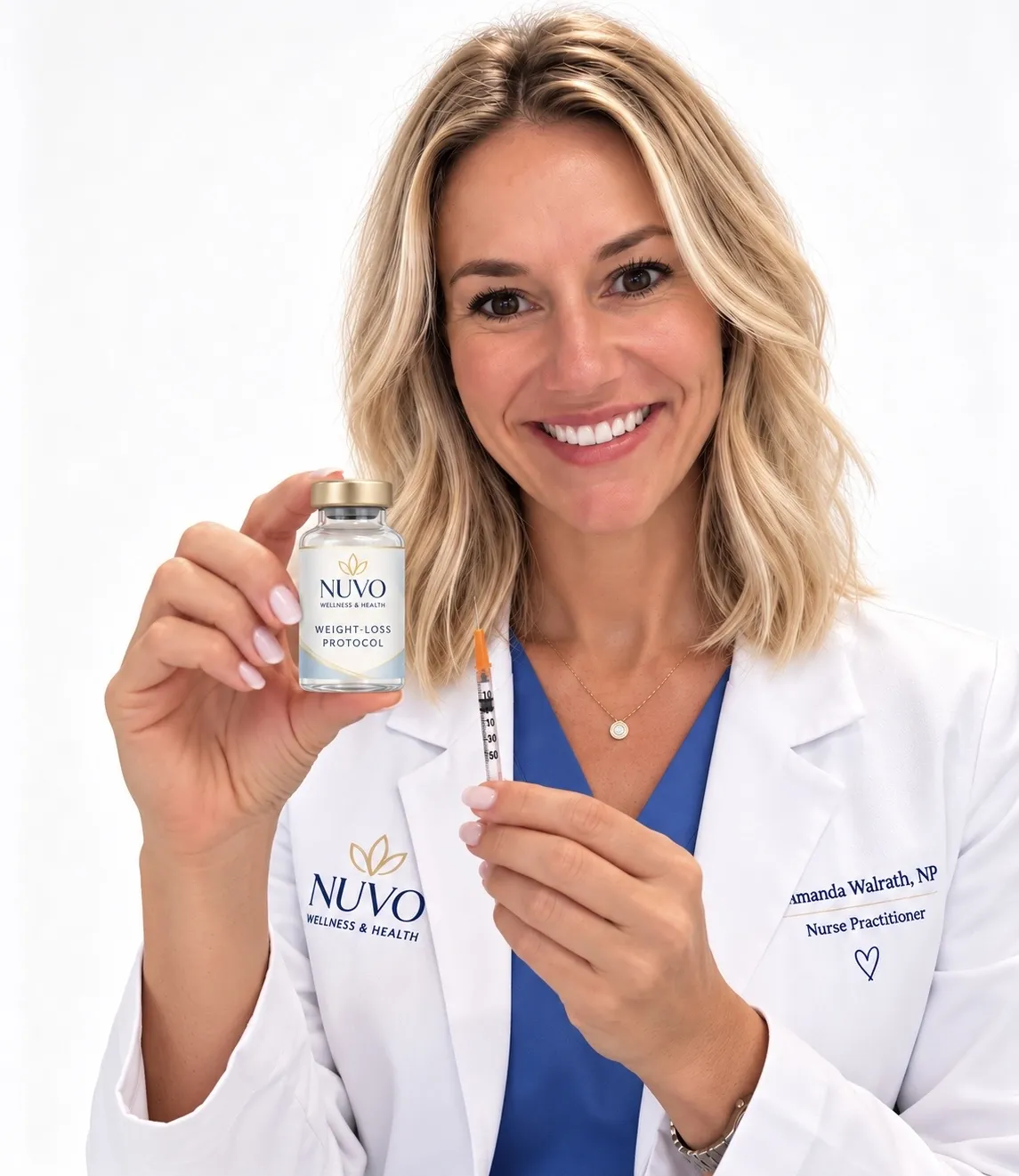
Have questions about your own care? Book your free consult with Amanda by video, available to adults anywhere in Florida.
 Looking for medical weight loss in Florida? Get clinician-guided GLP-1 care by telehealth across Florida, starting with a free consult.See the program →
If you take GLP-1 medication before surgery or any procedure that involves anesthesia or sedation, your care team needs to know about it ahead of time. Semaglutide and tirzepatide slow how quickly your stomach empties, and that can matter when you are asleep or sedated. The good news is that with a little planning and clear communication, most people can handle this smoothly.
I'm Amanda Walrath, APRN, FNP-C, a Florida-licensed, board-certified family nurse practitioner with 17 years of clinical experience and the founder of Nuvo Wellness and Health. I started Nuvo after my own weight-loss struggle after having kids, and I've taken the same medication I offer my patients. Questions about upcoming procedures come up often, so here is how I walk patients through it.
Why GLP-1 medication matters before surgery or sedation
GLP-1 medications work partly by slowing gastric emptying, which is one reason you may feel full longer. That is helpful for appetite, but it means food or liquid can stay in the stomach longer than the usual fasting window expects.
Under general anesthesia or deep sedation, your normal protective reflexes are reduced. If the stomach is not empty, there is a small risk that its contents could be inhaled into the lungs, called aspiration. Anesthesia teams plan around this risk every day, and knowing you take a GLP-1 medication helps them plan well.
What current guidance says about GLP-1 medication before surgery
In 2024, several medical societies, including the American Society of Anesthesiologists and the American Gastroenterological Association, issued joint guidance on GLP-1 medications around surgery and procedures. In general, it says many patients can continue their medication, while some may be asked to follow a liquid diet for about 24 hours beforehand or, in certain situations, to hold a dose. The decision is individualized.
Factors your team may weigh include:
Policies vary by hospital, surgery center and practice, so the instructions you receive from your own surgical and anesthesia team are the ones to follow. Please don't stop, skip or change your medication on your own based on an article, including this one.
Procedures where this comes up
It is not only major surgery. Let the team know about your GLP-1 medication for any of these:
Your pre-procedure checklist on semaglutide or tirzepatide
If you are not sure what your dose is in milligrams, check your prescription label or our semaglutide dosage chart post, and call us if you still have questions. Nuvo's GLP-1 Patient Guide also has a handy place to keep track of your dose and injection day.
Who decides what: a quick guide
After your procedure: restarting and recovering
If your team asked you to hold a dose, reach out to us before restarting. Depending on how long you were off and how you are feeling, your provider may recommend resuming your usual dose or adjusting it. We do not give one-size-fits-all restart rules, because the right answer depends on your history.
During recovery, focus on hydration and protein as you are able, since both support healing. Some pain medications can add to constipation, which GLP-1 medication can also cause, so let your care team know if that becomes a problem. If you have severe or persistent abdominal pain, repeated vomiting, signs of dehydration or trouble breathing, seek urgent care right away.
How to get started with Nuvo
Nuvo Wellness and Health is a Florida-only telehealth practice based in Stuart, serving adults anywhere in the state. Here is how it works:
Already a patient with a procedure coming up? Call or text us during office hours, Monday through Friday 9 to 5 and Saturday 10 to 2, and we'll help you plan.
Frequently asked questions
This article is for educational purposes and is not medical advice. Compounded medications are not FDA-approved. Prescriptions are issued only after a medical evaluation determines treatment is appropriate. Always follow the instructions of your surgical and anesthesia team. Individual results vary.