
GLP-1 Medication for Menopause Weight Gain: What Florida Women Should Know
Why weight often shifts in perimenopause and menopause, where GLP-1 medication may fit, and what to discuss with a provider before starting.
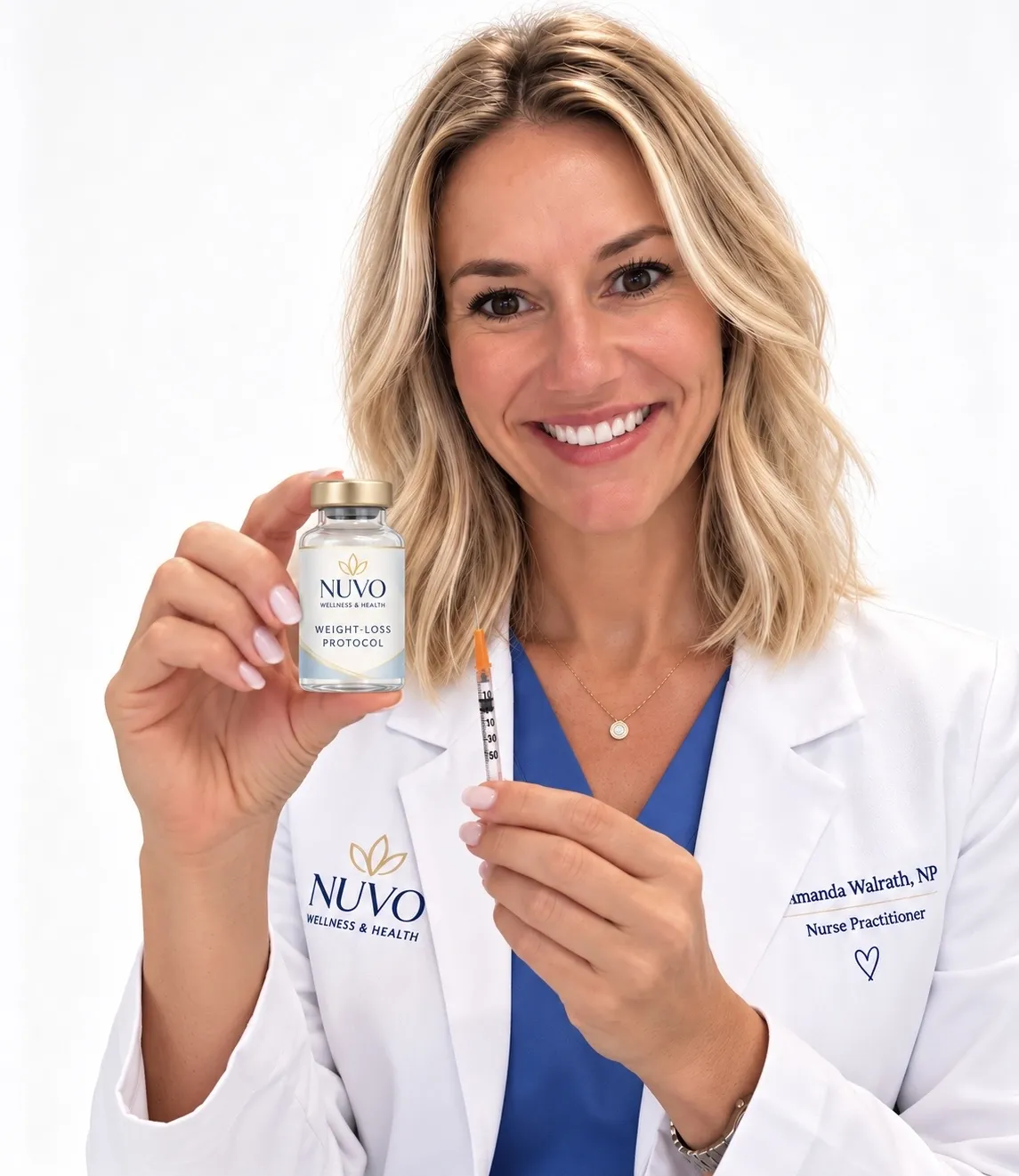
Have questions about your own care? Book your free consult with Amanda by video, available to adults anywhere in Florida.
 Looking for medical weight loss in Stuart, FL? Get clinician-guided GLP-1 care by telehealth across Florida, starting with a free consult.See the program →
GLP-1 medication for menopause weight gain is one of the most common questions I hear from women in Florida in their 40s and 50s. Many tell me they are eating the way they always have, staying as active as they can, and still watching the scale creep up, often around the middle. This guide explains why weight tends to shift during perimenopause and menopause, where medications like compounded semaglutide and tirzepatide may fit, and what is worth discussing with a provider before you start.
I'm Amanda Walrath, APRN, FNP-BC, a Florida-licensed, board-certified family nurse practitioner with 17 years of clinical experience and the founder of Nuvo Wellness and Health. I started Nuvo after my own weight-loss struggle after having kids, and I've taken the same medication I offer. I know how discouraging it feels when your body seems to stop responding to the habits that used to work, and I want you to have clear, honest information.
Why weight gain is so common in perimenopause and menopause
Menopause is a normal life stage, but the years around it bring real physical changes that can make weight harder to manage. Several factors often overlap:
None of this means you have done something wrong. It means the approach that worked at 30 may need adjusting now, and that support can help.
How GLP-1 medication may help with menopause weight gain
Semaglutide and tirzepatide work on hormones involved in appetite and fullness. Many people find they feel satisfied with smaller portions, notice fewer cravings, and have an easier time making consistent food choices. Tirzepatide acts on two hormone pathways (GIP and GLP-1), while semaglutide acts on one (GLP-1).
These medications were not designed specifically for menopause, and they do not relieve hot flashes or replace menopause care. For women who meet medical criteria for weight-loss treatment, though, they may be one tool alongside nutrition, strength training, sleep and stress support. Some early research has looked at whether menopausal hormone therapy used alongside GLP-1 medication affects weight loss, but that evidence is still limited and is not a reason to start, stop or change hormone therapy on your own. Individual results vary.
Safety questions to discuss before starting GLP-1 medication in midlife
A thorough evaluation matters at every age. In midlife, these topics are especially worth bringing to your provider:
Common side effects such as nausea, constipation, reflux and fatigue are usually most noticeable when starting or after a dose change. Contact your provider about side effects that concern you, and seek urgent care for severe or persistent abdominal pain, repeated vomiting, signs of dehydration or symptoms of an allergic reaction.
Habits that support results during menopause
Medication works best as part of a bigger plan. These are the areas I focus on with midlife patients:
For more practical detail on injections, storage and when to call, see Nuvo's GLP-1 Patient Guide.
Setting realistic expectations for menopause weight loss
Progress in midlife is often steadier and slower than it was in your 20s or 30s, and that is normal. Instead of judging success by the scale alone, it can help to notice how your clothes fit, your energy, your strength, and how in control you feel around food. Doses are increased gradually, only when directed by your provider, to balance effectiveness with how well you tolerate the medication. Individual results vary.
How to get started with Nuvo
Nuvo Wellness and Health is a Florida-only telehealth practice, so you can start from home anywhere in the state. Here's how it works:
Frequently asked questions
This article is for educational purposes and is not medical advice. Compounded medications are not FDA-approved. Prescriptions are issued only after a medical evaluation determines treatment is appropriate. Individual results vary.