
Questions to Ask Before Starting Semaglutide: A Florida Patient Checklist
The questions worth bringing to your provider before starting semaglutide, from safety and dosing to cost, follow-up and what happens long term.
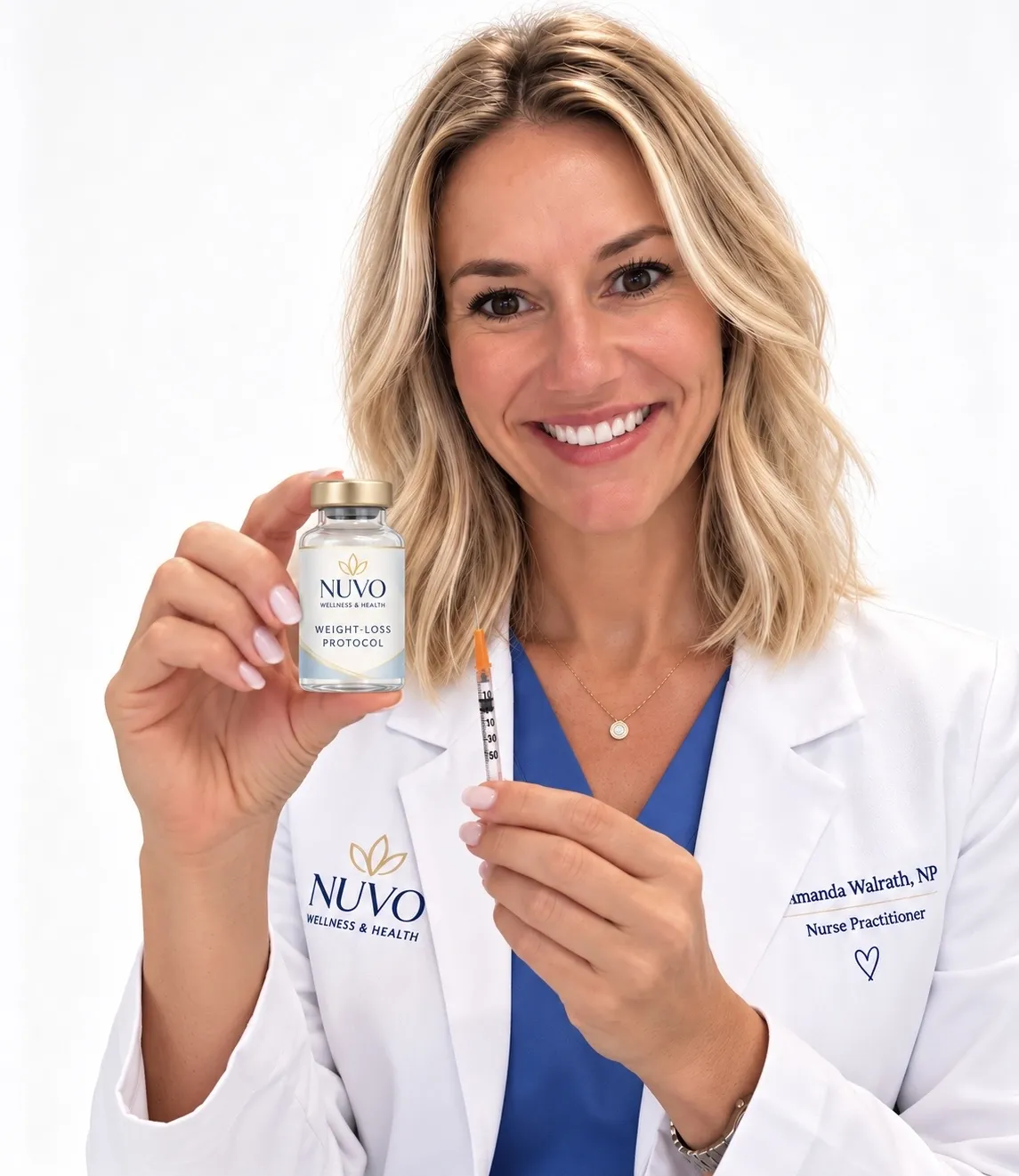
Have questions about your own care? Book your free consult with Amanda by video, available to adults anywhere in Florida.
 Considering semaglutide? Nuvo offers compounded semaglutide in Stuart, FL and by telehealth across Florida, 2 payments of $200 per vial ($400 total) with a free consult.See semaglutide →
Knowing the right questions to ask before starting semaglutide can make your first visit more useful and help you decide, with your provider, whether treatment is a good fit. This checklist covers what to ask about your health history, the medication itself, dosing, side effects, cost and long-term planning, so you leave your appointment with clear answers instead of a list of worries.
I'm Amanda Walrath, APRN, FNP-C, a Florida-licensed, board-certified family nurse practitioner with 17 years of clinical experience and the founder of Nuvo Wellness and Health. I started Nuvo after my own weight-loss struggle after having kids, and I've taken the same medication I offer. I remember sitting on the patient side with a dozen questions and not knowing which ones mattered most. These are the ones I'd want every patient to ask, whether they see me or another provider.
Questions to ask about your health before starting semaglutide
The most important part of any GLP-1 visit is your own health history. A good provider will ask about it, but it helps to come prepared and to ask directly how each item affects your plan.
Questions to ask about the medication and where it comes from
Compounded semaglutide is prepared by a pharmacy rather than made by a brand-name manufacturer. The FDA notes that compounded drugs are not FDA-approved and are not reviewed by the agency for safety, effectiveness or quality before they are sold. The FDA has also raised concerns about products made with salt forms of semaglutide, such as semaglutide sodium or semaglutide acetate, and about products sold without a prescription. That makes these questions worth asking:
Be cautious with any website that sells semaglutide without a medical evaluation, promises guaranteed results, or describes a compounded product as the same as a brand-name drug.
Semaglutide dosing questions to ask your provider
The FDA has received reports of dosing errors with compounded injectable semaglutide, often from confusion between milligrams, milliliters and syringe units. Ask your provider to walk you through your exact dose before your first injection, and repeat it back so you're both sure.
For reference, Nuvo's compounded semaglutide is 2.5 mg/mL and is drawn up with a 50-unit (0.5 mL) U-100 syringe, so a 0.25 mg dose is 10 units. Our semaglutide dosage chart post lays out the full unit conversions for that concentration. Always follow the dose your own provider prescribes.
Questions to ask about side effects and when to call
Common side effects of semaglutide include nausea, constipation, diarrhea, heartburn, fatigue and a smaller appetite, especially early on or after a dose change. Ask your provider:
Seek urgent care for severe or persistent stomach pain (with or without vomiting), signs of a serious allergic reaction such as swelling of the face or throat or trouble breathing, vomiting or diarrhea that keeps you from holding down fluids, or pain in the upper right abdomen with fever or yellowing of the skin or eyes. Nuvo's GLP-1 Patient Guide covers storage, injections and when to call in more detail.
Questions to ask about cost, follow-up and the long term
Cash-pay pricing varies a lot between programs, so ask exactly what you're paying for and for how long.
At Nuvo, compounded semaglutide (2.5 mg/mL) is $400 per 4 mL (10 mg) vial, payable as 2 payments of $200. If you and your provider decide tirzepatide is a better fit, compounded tirzepatide (15 mg/mL) is $500 per 4 mL (60 mg) vial, payable as 2 payments of $250.
It's also worth asking what the plan looks like months from now: how you'll build habits like protein-rich meals, hydration, strength training and sleep, and what happens if you decide to stop. Weight-loss medication works best as part of a bigger plan, and individual results vary.
How to get started with Nuvo
Nuvo is a telehealth-only practice based in Stuart, serving adults across Florida. Our hours are Monday through Friday 9 to 5 and Saturday 10 to 2. You can book at nuvowellnessandhealth.janeapp.com or email nuvowellnessandhealth@gmail.com.
Frequently asked questions
This article is for educational purposes and is not medical advice. Compounded medications are not FDA-approved. Prescriptions are issued only after a medical evaluation determines treatment is appropriate. Individual results vary.