
Stopping GLP-1 Medication: How to Maintain Your Weight After Semaglutide or Tirzepatide in Florida
What research shows about stopping semaglutide or tirzepatide, why weight can return, and how to plan a safer transition with your provider.
 Looking for medical weight loss in Stuart, FL? Get clinician-guided GLP-1 care by telehealth across Florida, starting with a free consult.See the program →
Stopping GLP-1 medication is a decision many people think about long before they're ready to make it. Maybe you've reached a goal, your budget has changed, side effects have been hard, or you simply want to know what happens if you ever stop compounded semaglutide or tirzepatide. These are fair questions, and the answers are worth understanding before you start treatment, not just at the end.
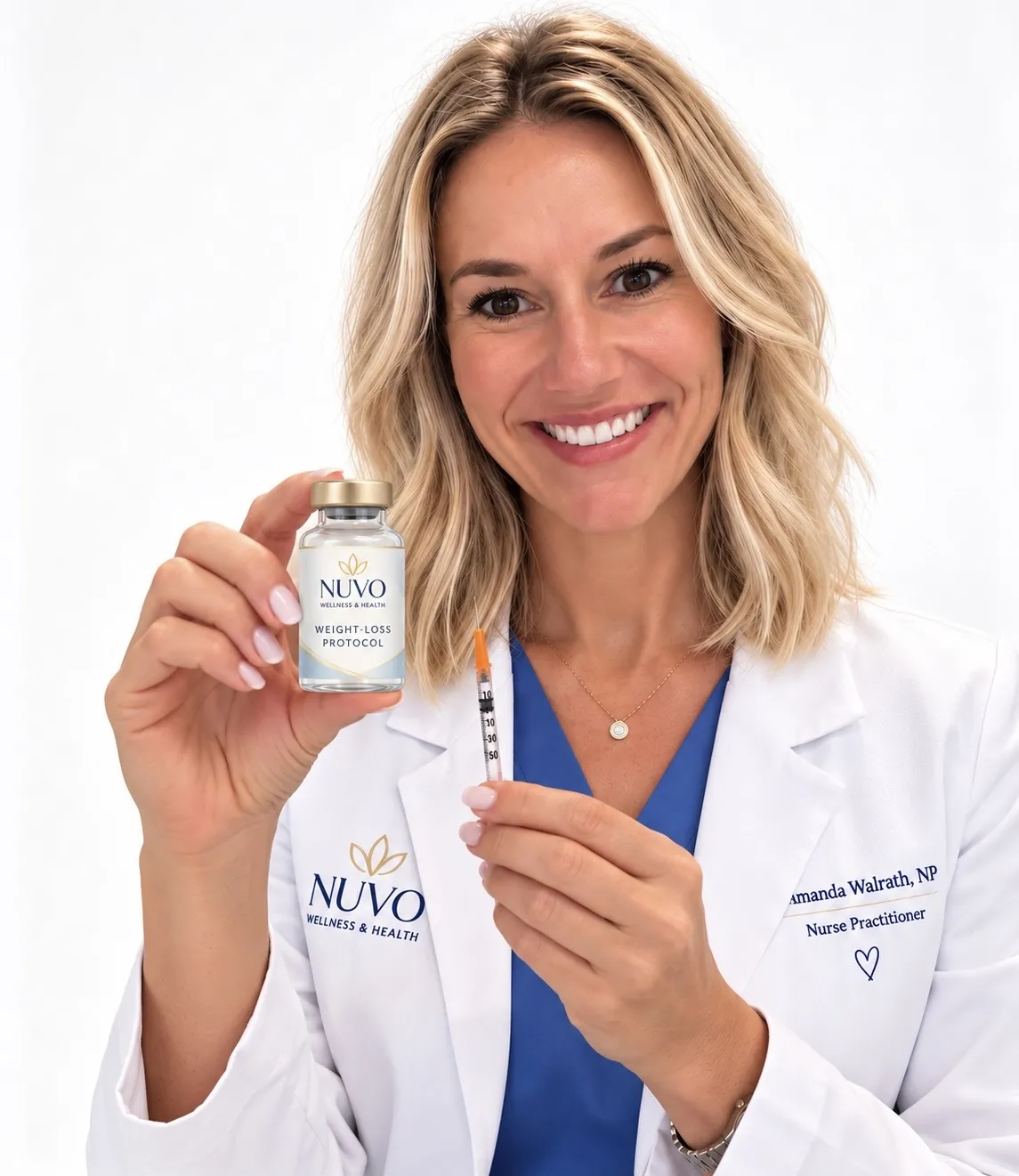
I'm Amanda Walrath, APRN, FNP-BC, a Florida-licensed, board-certified family nurse practitioner with 17 years of clinical experience and the founder of Nuvo Wellness and Health. I started Nuvo after my own weight-loss struggle after having kids, and I've taken the same medication I offer. I've thought about this question for myself, too. My goal is to give you honest, practical information so you can plan ahead with your provider instead of guessing.
What happens when you stop GLP-1 medication?
GLP-1 medications work while you're taking them. They help with appetite and fullness, slow how quickly your stomach empties and support blood sugar regulation. When the medication is stopped, those effects fade over the following weeks. Many people notice that hunger, cravings and portion sizes start to drift back toward where they were before treatment.
That isn't a lack of willpower. Weight is regulated by hormones, appetite signals and metabolism, and the body tends to defend a higher weight after weight loss. This is one reason obesity is increasingly treated as a long-term condition rather than a short-term project.
What research shows about weight regain after stopping semaglutide or tirzepatide
Two well-known clinical trials looked at what happened when participants stopped these medications. Both studied the FDA-approved brand-name products, not compounded versions, so they help explain the general pattern rather than predict any one person's results.
Regain was not identical for everyone, and some people kept more of their progress than others. Individual results vary. The practical lesson is that stopping should be a planned conversation with your provider, not something you do suddenly on your own.
Common reasons people consider stopping
If you're having severe abdominal pain that doesn't go away, pain that spreads to your back, persistent vomiting, signs of dehydration or any symptom that worries you, don't wait for a scheduled follow-up. Contact your provider right away or seek urgent care.
How to maintain weight after stopping GLP-1 medication
The habits you build while on treatment are what you carry with you afterward. These are the areas I focus on with patients who are thinking about the long run:
Nuvo's GLP-1 Patient Guide covers nutrition, hydration, injections and when to call, and it's a helpful reference whether you're starting, continuing or planning a change.
Should you taper off semaglutide or tirzepatide?
There isn't one schedule that fits everyone, and you should never change your dose on your own. Some people and providers prefer a gradual step down over time so changes in appetite are easier to notice and manage, while others stop for medical reasons that call for a different approach. If you're on compounded semaglutide, you can see how doses translate to syringe units in Nuvo's semaglutide dosage chart post, but any change to your dose should only happen when your provider directs it. If you miss a dose or aren't sure what to do next, call or text Nuvo for guidance.
How to get started with Nuvo
Whether you're considering GLP-1 treatment for the first time or want a plan that looks beyond the first few months, the first step is a conversation.
Nuvo is cash-pay with no monthly membership. Compounded semaglutide (2.5 mg/mL) is $400 per 4 mL vial and compounded tirzepatide (15 mg/mL) is $500 per 4 mL vial, each lasting about 12 weeks depending on your dose, with medication, supplies, shipping and ongoing follow-up included.
Frequently asked questions
This article is for educational purposes and is not medical advice. Compounded medications are not FDA-approved. Prescriptions are issued only after a medical evaluation determines treatment is appropriate. Individual results vary.