
Gallbladder Problems on GLP-1 Medication: Symptoms, Risk Factors and When to Call (Florida Guide)
Why gallbladder issues can come up during GLP-1 weight loss, which symptoms need prompt care, and how to lower your risk on semaglutide or tirzepatide.
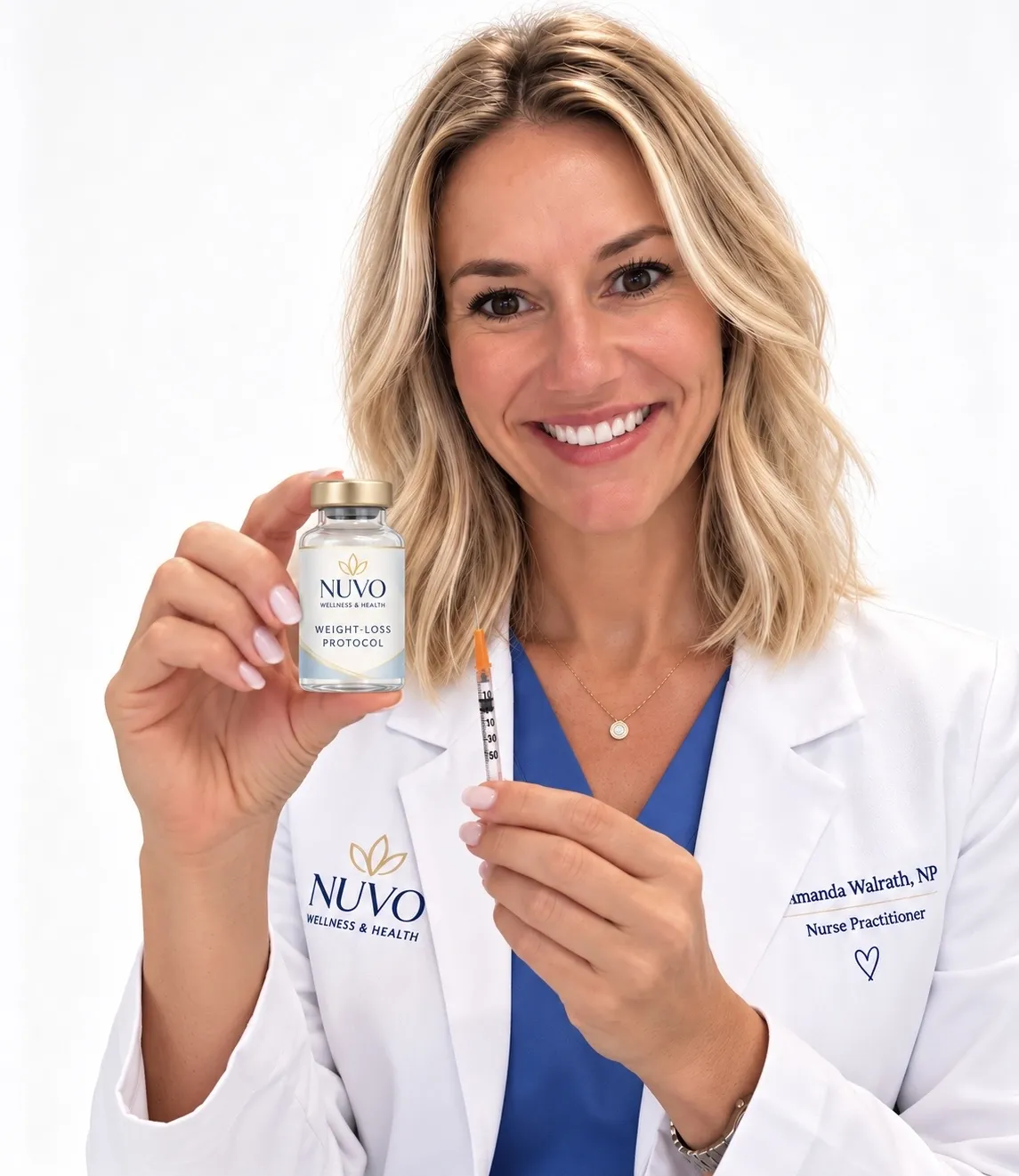
Have questions about your own care? Book your free consult with Amanda by video, available to adults anywhere in Florida.
 Considering semaglutide? Nuvo offers compounded semaglutide in Stuart, FL and by telehealth across Florida, $400 per vial with a free consult.See semaglutide →
Gallbladder problems on GLP-1 medication are uncommon, but they are a real, labeled risk that every person starting semaglutide or tirzepatide in Florida should understand. Knowing which symptoms are normal adjustment side effects and which ones need prompt medical attention can help you stay safe and feel more confident during treatment. This guide explains, in plain language, why the gallbladder can be affected, who may be at higher risk, and what to do if something doesn't feel right.
I'm Amanda Walrath, APRN, FNP-BC, a Florida-licensed, board-certified family nurse practitioner with 17 years of clinical experience and the founder of Nuvo Wellness and Health. I started Nuvo after my own weight-loss struggle after having kids, and I've taken the same medication I offer. I bring up the gallbladder in every evaluation because a short conversation up front makes it much easier for patients to recognize warning signs later.
Why GLP-1 medication can affect the gallbladder
Your gallbladder is a small organ under the liver that stores bile, a fluid that helps digest fat. Gallstones can form when bile becomes too concentrated or the gallbladder doesn't empty regularly.
Two things that often happen during GLP-1 treatment can play a role. First, weight loss itself, especially faster weight loss, is a well-known risk factor for gallstones, whether it comes from medication, a very low-calorie diet or surgery. Second, eating much smaller or less frequent meals, which is common when appetite drops, may mean the gallbladder contracts less often. FDA prescribing information for brand-name semaglutide and tirzepatide weight-loss medications includes a warning about acute gallbladder disease, including gallstones (cholelithiasis) and gallbladder inflammation (cholecystitis), and advises gallbladder evaluation if gallstones are suspected.
Gallbladder symptoms on GLP-1 medication to watch for
Common early side effects such as mild nausea, feeling full quickly or occasional constipation usually ease as your body adjusts. Gallbladder symptoms tend to look different. Contact your provider promptly, or seek urgent care, if you notice:
Severe, persistent abdominal pain can also be a sign of pancreatitis, another condition listed in GLP-1 prescribing information. Because the two can be hard to tell apart without an exam and testing, severe or ongoing abdominal pain should always be evaluated right away rather than waited out at home. If symptoms are severe, go to the nearest emergency department or call 911.
Who may have a higher risk of gallbladder problems
Some factors are linked to a higher chance of gallstones in general. Having one doesn't rule out treatment, but each is worth discussing during your evaluation:
If you've had your gallbladder removed, or you've had pancreatitis in the past, tell your provider. Pancreatitis history in particular needs a careful conversation before starting a GLP-1 medication. Other important history to share includes a personal or family history of medullary thyroid cancer or multiple endocrine neoplasia type 2 (MEN2), and whether you are pregnant, breastfeeding or planning a pregnancy.
How to support gallbladder health on semaglutide or tirzepatide
Nothing can guarantee you'll avoid gallbladder problems, but these habits support digestive health during treatment:
For more on eating well during treatment, see our GLP-1 diet plan post and our GLP-1 Patient Guide, which covers storage, injections and when to call.
What happens if a gallbladder problem is suspected
If your symptoms suggest a gallbladder issue, you'll likely be directed to urgent care, an emergency department or your primary care provider for a hands-on exam, where testing such as bloodwork and an abdominal ultrasound can be done. Telehealth is a good fit for ongoing weight-loss care, but suspected gallbladder disease needs a hands-on exam and imaging.
Your prescriber will help decide whether to pause or adjust your GLP-1 medication based on what the evaluation shows. Please don't stop, restart or change your dose without guidance, and if you have questions about a missed or held dose, call or text Nuvo so we can advise you.
How to get started with Nuvo
Nuvo Wellness and Health is a Florida-only telehealth practice based in Stuart that serves adults anywhere in Florida. Here's how care works:
Care is cash-pay with transparent per-vial pricing, and medication, supplies, shipping and ongoing follow-up are included. Individual results vary.
Frequently asked questions
This article is for educational purposes and is not medical advice. Compounded medications are not FDA-approved. Prescriptions are issued only after a medical evaluation determines treatment is appropriate. Individual results vary. If you have severe abdominal pain or other urgent symptoms, seek emergency care.