
Can You Use an HSA or FSA for GLP-1 Weight Loss Medication in Florida?
What IRS rules say about prescribed weight-loss treatment, what your plan may ask for, and how to budget for cash-pay GLP-1 care in Florida.
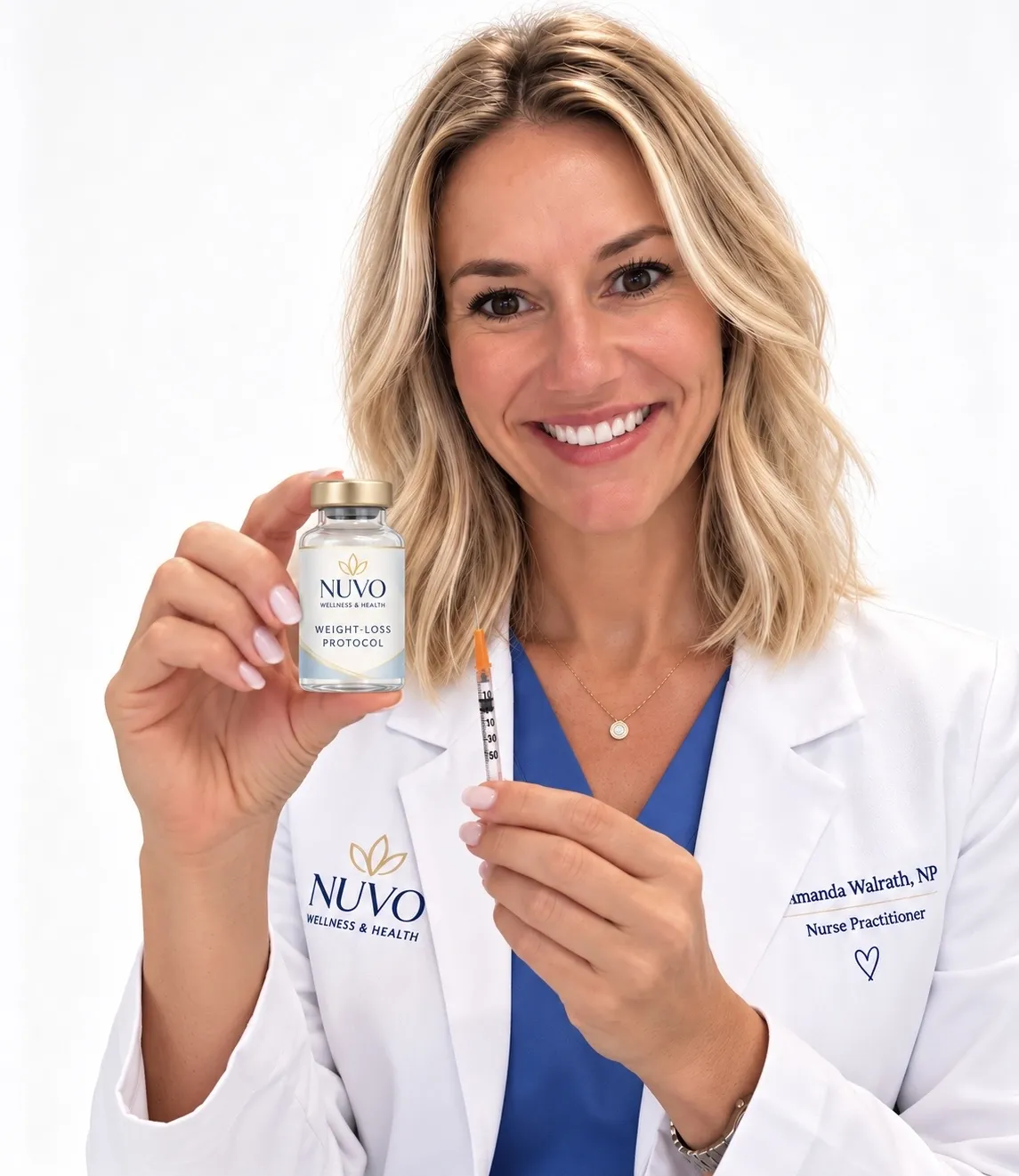
Have questions about your own care? Book your free consult with Amanda by video, available to adults anywhere in Florida.
 Considering semaglutide? Nuvo offers compounded semaglutide in Stuart, FL and by telehealth across Florida, $400 per vial with a free consult.See semaglutide →
If you're wondering whether you can use an HSA or FSA for GLP-1 weight loss medication, you're asking a smart budgeting question. Under IRS rules, prescribed medication and treatment for a specific diagnosed disease, such as obesity, can count as a qualified medical expense, but every plan has its own documentation requirements, and the final call on any claim belongs to your plan administrator. This guide explains what the rules say, what to ask before you pay, and how to plan for cash-pay compounded semaglutide or tirzepatide in Florida.
I'm Amanda Walrath, APRN, FNP-BC, a Florida-licensed, board-certified family nurse practitioner with 17 years of clinical experience and the founder of Nuvo Wellness and Health. I started Nuvo after my own weight-loss struggle after having kids, and I've taken the same medication I offer. Because our care is cash-pay, people often ask me how to make it fit their budget, and pre-tax health accounts come up a lot.
HSA and FSA basics for weight loss medication
A health savings account (HSA) and a flexible spending account (FSA) both let you pay for qualified medical expenses with pre-tax dollars. What counts as a qualified medical expense is defined by the IRS, and the IRS states that medical expenses eligible under those rules can be paid or reimbursed through an HSA, FSA, Archer MSA or HRA. One important catch: an expense paid or reimbursed with pre-tax account money can't also be deducted as a medical expense on your federal tax return.
The two accounts work differently day to day. FSA claims are typically reviewed by a plan administrator, who may ask for documentation before approving reimbursement. With an HSA, you're generally responsible for keeping records that show a purchase was a qualified medical expense in case you're ever asked to support it.
What IRS rules say about weight-loss treatment
The IRS addresses weight loss directly in its frequently asked questions about medical expenses. A weight-loss program can be a medical expense, but only if it treats a specific disease diagnosed by a physician, such as obesity, diabetes, hypertension or heart disease. Otherwise, the IRS says, the cost of a weight-loss program is not a medical expense. The IRS also includes the cost of prescribed medicines and drugs in medical expenses, while drugs that aren't prescribed (other than insulin) don't qualify.
These are general rules, not a guarantee that a specific purchase will be approved. Your plan document controls the details, so treat this table as a starting point for your questions, not the final answer.
Using HSA or FSA funds for GLP-1 medication: questions to ask your plan
Before you count on pre-tax funds for semaglutide or tirzepatide, a five-minute call or message to your plan administrator can save you a denied claim later. Ask:
If your plan asks for something from your provider, let us know what it is and we'll talk through what we can provide.
Does insurance cover compounded semaglutide or tirzepatide?
Using an HSA or FSA is different from insurance coverage. Insurance plans set their own rules for weight-loss medications, and coverage for compounded medications is generally limited. Nuvo is a cash-pay practice, and our providers are not contracted with insurance plans. Pre-tax accounts, when your plan allows them, are one way some people make cash-pay care fit their budget.
How to budget for cash-pay GLP-1 care in Florida
Whether you use pre-tax funds or not, it helps to know exactly what you're paying for. At Nuvo there's no monthly membership. Pricing is per vial:
How long a vial lasts depends on your dose, and dose increases happen only when your provider directs them, so your actual timeline may differ. For a deeper look at how costs compare, read our post on semaglutide and tirzepatide cost in Stuart, FL, and for how doses translate into syringe units, see our semaglutide dosage chart. Keep every itemized receipt in one folder or email label so you have records ready if your plan or the IRS ever asks.
How to get started with Nuvo
Our hours are Monday through Friday 9 to 5 and Saturday 10 to 2. You can book at nuvowellnessandhealth.janeapp.com or email nuvowellnessandhealth@gmail.com.
Safety comes before budgeting
GLP-1 medications aren't right for everyone. People with a personal or family history of medullary thyroid cancer or MEN2 should not use them, and they are not used during pregnancy. A history of pancreatitis, gallbladder disease or kidney problems needs to be discussed with your provider before starting. Common side effects include nausea, constipation and reduced appetite. If you have severe or persistent abdominal pain, signs of an allergic reaction or trouble keeping fluids down, contact your provider right away or seek urgent care. Individual results vary.
FAQ
This article is for educational purposes and is not medical, tax or financial advice. Compounded medications are not FDA-approved. Prescriptions are issued only after a medical evaluation determines treatment is appropriate. HSA and FSA eligibility is determined by IRS rules and your plan administrator. Individual results vary.