
Hair Loss on GLP-1 Medication: Why It Happens and What Helps (Florida Guide)
Why some people notice shedding on semaglutide or tirzepatide, what the research suggests, and practical steps to protect your hair.
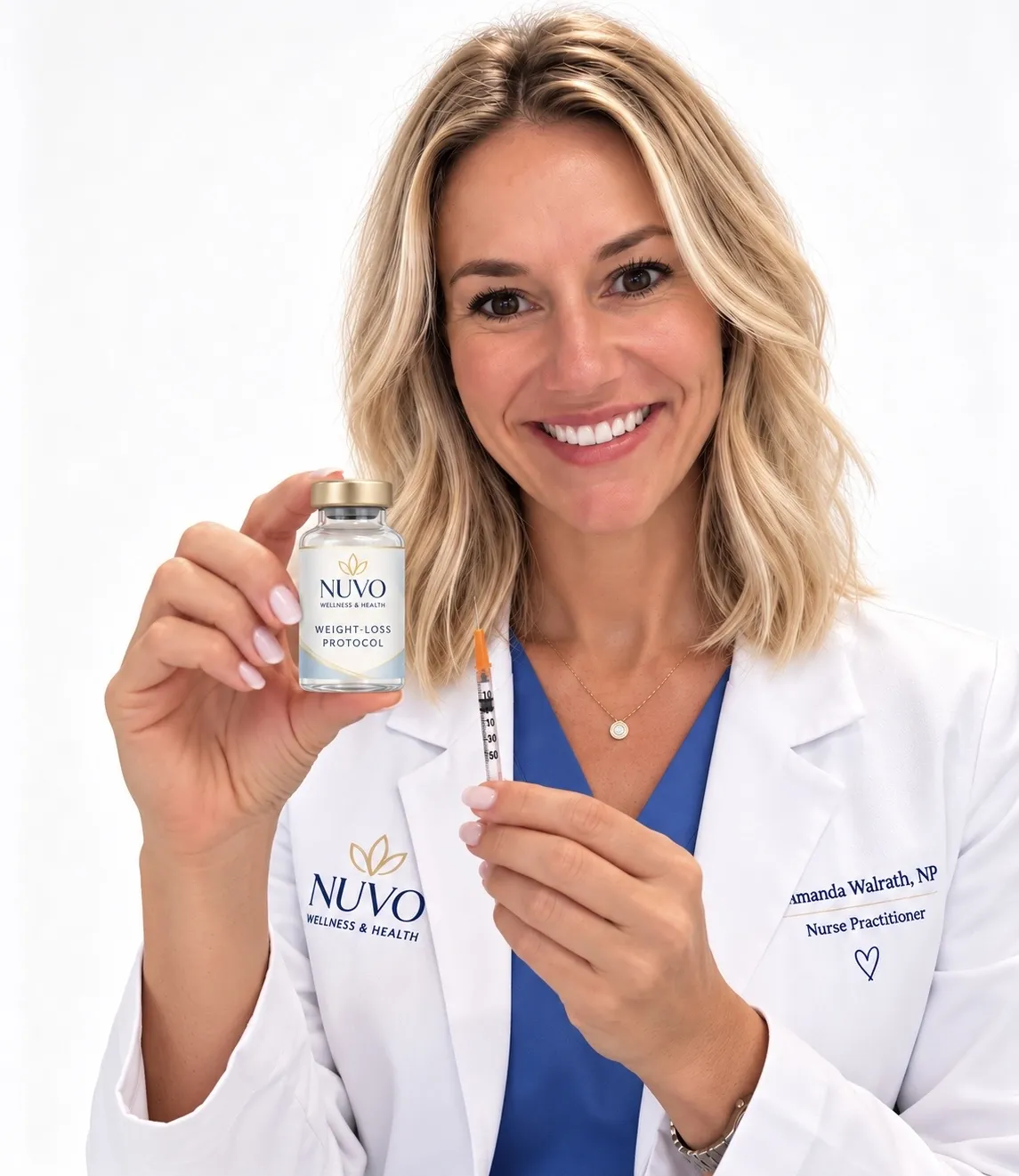
 Looking for medical weight loss in Stuart, FL? Get clinician-guided GLP-1 care by telehealth across Florida, starting with a free consult.See the program →
Hair loss on GLP-1 medication is one of the questions I hear most from women considering semaglutide or tirzepatide, and it is a fair one to ask before you start. The short answer: some people do notice extra shedding during weight loss, it appears to be linked mostly to how quickly weight comes off and how well you are eating, and in most reported cases it looks temporary. This guide explains what the research suggests, what you can do to support your hair, and when to check in with your provider.
I'm Amanda Walrath, APRN, FNP-BC, a Florida-licensed, board-certified family nurse practitioner with 17 years of clinical experience and the founder of Nuvo Wellness and Health. I started Nuvo after my own weight-loss struggle after having kids, and I've taken the same medication I offer. I'd rather you hear the honest version of this topic from your clinician than from a scary comment thread.
Does GLP-1 medication cause hair loss?
Hair loss has been reported in clinical trials of brand-name semaglutide and tirzepatide for weight management, more often than in people taking a placebo. A recent systematic review of the evidence summarized rates of roughly 3% with weekly semaglutide 2.4 mg versus about 1% with placebo, and roughly 5% with tirzepatide versus about 1% with placebo. Hair loss was reported more often by women than by men in these studies.
That means most people in the trials did not report hair loss. Hair loss was also often not a main focus of these studies, so some shedding may go unreported. It is worth knowing about, without assuming it will happen to you.
Why hair shedding can happen during GLP-1 weight loss
Researchers think most GLP-1-related hair loss is a pattern called telogen effluvium. Normally, most of your hair is in a growing phase. A significant stress on the body, such as rapid weight loss, a big drop in calories, illness or surgery, can push more hairs into a resting phase at the same time. A few months later, those hairs shed together, and you notice more hair in your brush or shower drain.
The same kind of shedding is well known after bariatric surgery and other rapid weight loss, which is why experts point to the weight loss itself, and to eating too little protein or too few nutrients, rather than to the medication directly damaging hair follicles. Shedding was reported more often in people who lost more weight.
How to reduce hair loss on GLP-1 medication
You can't control everything about your hair, but the factors experts link to shedding are ones we can work on together.
For more on these habits, see Nuvo's posts on protein and hydration and on strength training on GLP-1 medication, plus our GLP-1 Patient Guide.
When to talk to your provider about hair loss
Mild, diffuse shedding a few months into treatment is often part of the weight-loss process, but it is still worth mentioning at your next follow-up. Reach out sooner if any of these apply:
Your provider may review your eating, check labs such as iron, thyroid or vitamin D, adjust your plan, or refer you to a dermatologist. Please don't stop or change your dose on your own; call or text your provider. For severe symptoms of any kind, seek urgent care.
What to know before starting GLP-1 medication
Semaglutide and tirzepatide are not right for everyone. A personal or family history of medullary thyroid cancer or MEN2 rules them out, and they are not used during pregnancy. A history of pancreatitis, gallbladder disease or kidney problems must be discussed with your provider. The most common side effects are digestive, such as nausea and constipation. If you have a history of significant hair loss, share it during your evaluation so we can plan for it.
How to get started with Nuvo
Nuvo Wellness and Health is a Florida-only telehealth practice based in Stuart, serving adults anywhere in Florida. Here is how it works:
Care is cash-pay with no monthly membership. Compounded semaglutide (2.5 mg/mL) is $400 per 4 mL (10 mg) vial, and compounded tirzepatide (15 mg/mL) is $500 per 4 mL (60 mg) vial, each lasting about 12 weeks depending on dose, with medication, supplies, shipping and ongoing follow-up included. Hours are Monday to Friday 9 to 5 and Saturday 10 to 2.
Hair loss on GLP-1 medication: frequently asked questions
This article is for educational purposes and is not medical advice. Compounded medications are not FDA-approved. Prescriptions are issued only after a medical evaluation determines treatment is appropriate. Individual results vary.