
← All articles
Semaglutide

Semaglutide for PCOS Weight Loss: What Florida Women Should Know

How PCOS affects weight, what research says so far about GLP-1 medication, and what to discuss with a provider before starting.
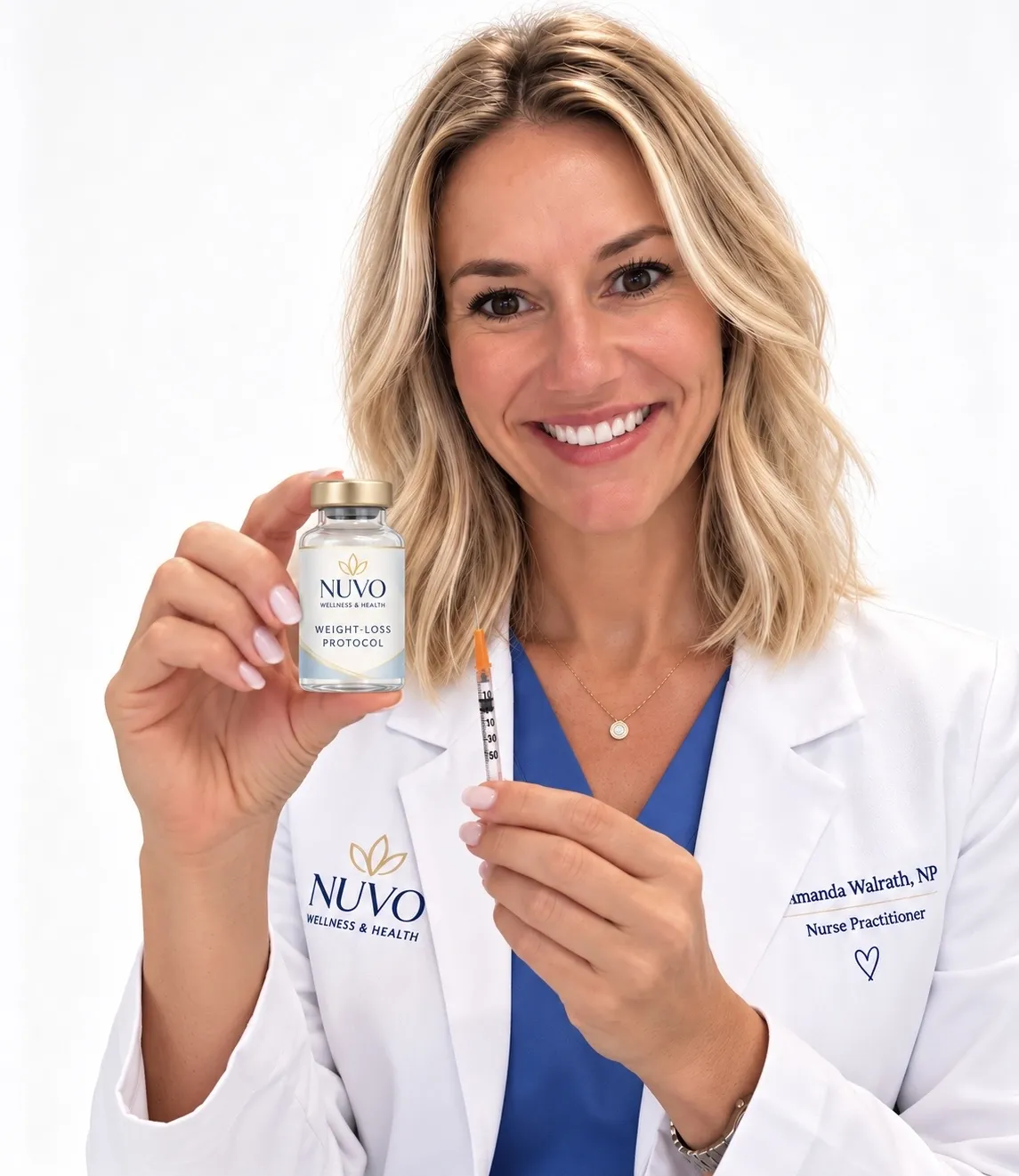
Amanda Walrath
Amanda Walrath, APRN, FNP-BCNovember 12, 2026

Have questions about your own care? Book your free consult with Amanda by video, available to adults anywhere in Florida.

A patient at home on a video visit with a Nuvo provider Considering semaglutide? Nuvo offers compounded semaglutide in Stuart, FL and by telehealth across Florida, $400 per vial with a free consult.See semaglutide →

Semaglutide for PCOS weight loss is a question I hear more and more from women across Florida. Polycystic ovary syndrome (PCOS) can make weight feel stubborn no matter how carefully you eat or how often you exercise, and many women have heard that GLP-1 medication might help. This guide explains how PCOS and weight are connected, what research shows so far, the safety and pregnancy questions that matter most, and how to find out whether treatment is appropriate for you.

I'm Amanda Walrath, APRN, FNP-BC, a Florida-licensed, board-certified family nurse practitioner with 17 years of clinical experience and the founder of Nuvo Wellness and Health. I started Nuvo after my own weight-loss struggle after having kids, and I've taken the same medication I offer. I know how frustrating it is to do everything right and still feel like your body is working against you, so I want to give you honest, practical information.

No GLP-1 medication is FDA-approved to treat PCOS. Compounded semaglutide and tirzepatide are not FDA-approved, and they are not the same as, equivalent to, or generic versions of any brand-name medication. Whether treatment is appropriate for you is decided by a clinical evaluation.

Why PCOS can make weight loss harder

PCOS is a common hormonal condition that affects how the ovaries work. It looks different from woman to woman, but several features often make weight harder to manage:

–Insulin resistance. Many women with PCOS have insulin resistance, meaning the body needs more insulin to keep blood sugar steady. Higher insulin levels are linked with increased hunger and weight gain, especially around the middle.
–Hormone imbalance. Higher androgen levels can affect cycles, skin and hair, and may also influence where the body stores fat.
–Appetite and cravings. Many women with PCOS describe strong cravings or feeling hungry soon after eating.
–Stress, sleep and mood. Poor sleep and stress are common with PCOS and can make consistent habits harder to keep.

How semaglutide may help with PCOS weight loss

Semaglutide acts on GLP-1, a hormone involved in appetite, fullness and blood sugar regulation. Many people find they feel satisfied with smaller portions, have fewer cravings and find it easier to stay consistent with healthy choices. Tirzepatide works on two pathways (GIP and GLP-1) and is another option a provider may discuss.

Because insulin resistance plays a large role in PCOS for many women, researchers have been studying GLP-1 medications in this group. Early studies have looked at weight, insulin sensitivity and menstrual regularity, and some results are encouraging. Most of these studies are small or short-term, though, so the evidence is still developing. GLP-1 medication is not a cure for PCOS and does not replace care from your OB-GYN, endocrinologist or primary care provider. Individual results vary.

Semaglutide, PCOS and pregnancy: what to plan for

This is the most important section for many women with PCOS, because family planning is often part of the picture.

–GLP-1 medication should not be used during pregnancy. If you become pregnant while taking it, stop and contact your provider right away.
–If you are planning a pregnancy, talk with your provider well in advance. Brand-name semaglutide labeling advises stopping at least 2 months before a planned pregnancy, and your provider can help you plan timing.
–For some women with PCOS, cycles and ovulation become more regular as weight changes. That can mean pregnancy is possible even if it has been difficult before, so reliable contraception matters if you are not trying to conceive.
–If you use oral birth control, ask your provider how GLP-1 medication may affect it. Our article GLP-1 Medication and Birth Control: What to Know covers this in more detail.

Safety questions to discuss before starting semaglutide with PCOS

A thorough evaluation matters for every patient. Be ready to talk about:

–Personal or family history of medullary thyroid cancer or multiple endocrine neoplasia type 2 (MEN2). GLP-1 medications are not prescribed in this situation.
–History of pancreatitis, gallbladder disease, kidney problems or severe digestive conditions.
–Current or planned pregnancy, and whether you are breastfeeding.
–All medications and supplements you take, including metformin, birth control, diabetes medications and anything for blood sugar. Some combinations need closer monitoring.
–Any history of disordered eating, so your plan can be built safely around your needs.

Common side effects such as nausea, constipation, reflux and fatigue are usually most noticeable when starting or after a dose change. Contact your provider about side effects that concern you, and seek urgent care for severe or persistent abdominal pain, repeated vomiting, signs of dehydration or symptoms of an allergic reaction.

Habits that support PCOS weight loss alongside medication

Medication works best as part of a bigger plan. These are the areas I focus on with patients who have PCOS:

Focus area
Why it matters with PCOS
Simple place to start
Protein and fiber
Helps steady blood sugar and keeps you full longer
Build each meal around a protein and a vegetable
Strength training
Muscle helps your body use insulin more effectively
Two or three short sessions a week
Sleep
Poor sleep can increase hunger and cravings
Aim for a consistent bedtime and wake time
Regular meals
Long gaps can lead to blood sugar swings and overeating
Eat smaller meals at steady times, even with a lower appetite

Florida life can actually help here. Early morning or evening walks avoid the worst of the heat, and fresh seafood, citrus and produce make protein-forward meals easy.

What dosing looks like with semaglutide

Semaglutide is started at a low weekly dose and increased gradually, only when your provider directs it, to help your body adjust and limit side effects. Your plan is based on your evaluation, not on a PCOS diagnosis alone. If you want to understand how milligrams translate to syringe units, see our Semaglutide Dosage Chart post, and for storage, injections and when to call, read Nuvo's GLP-1 Patient Guide. If you ever miss a dose, call or text us for guidance.

How to get started with Nuvo

Nuvo is a Florida-only telehealth practice, so everything happens from home:

1.Book your complimentary initial consultation online. There is no monthly membership.
2.Meet with me by telehealth video visit. We review your health history, PCOS symptoms, medications, pregnancy plans and goals.
3.If a clinical evaluation determines treatment is appropriate, I prescribe compounded semaglutide or tirzepatide and explain your dosing plan.
4.Your medication is prepared by the pharmacy and shipped overnight cold by FedEx to your door. Please allow 5 to 7 days after your prescription for preparation and shipping.
5.We follow up by telehealth whenever you need us and at refill time.

Pricing is per vial with no membership: compounded semaglutide (2.5 mg/mL) is $400 per 4 mL (10 mg) vial, payable as 2 payments of $200, and compounded tirzepatide (15 mg/mL) is $500 per 4 mL (60 mg) vial, payable as 2 payments of $250. A vial typically lasts about 8 to 10 weeks, depending on your dosing plan. Medication, supplies, shipping and ongoing follow-up are included.

Questions before you book? Call or text (772) 210-4649, Monday to Friday 9 to 5 and Saturday 10 to 2.

Semaglutide for PCOS: frequently asked questions

Is semaglutide FDA-approved for PCOS?
No. No GLP-1 medication is FDA-approved to treat PCOS, and compounded semaglutide is not FDA-approved. Some women with PCOS may qualify for medical weight-loss treatment based on a clinical evaluation of their overall health, weight and history.
Can semaglutide help with PCOS insulin resistance?
Semaglutide affects hormones involved in blood sugar and appetite, and early research in women with PCOS has looked at insulin sensitivity, weight and cycle regularity. The evidence is still developing, and individual results vary. Your provider can help you decide whether it makes sense for you.
Can I take semaglutide if I am trying to get pregnant with PCOS?
GLP-1 medication should not be used during pregnancy. If you are planning a pregnancy, talk with your provider ahead of time about when to stop. Brand-name semaglutide labeling advises stopping at least 2 months before a planned pregnancy.
How do I start semaglutide for PCOS online in Florida?
Book a complimentary consultation with Nuvo, complete a telehealth visit, and if a clinical evaluation determines treatment is appropriate, your medication is shipped to your door anywhere in Florida.

This article is for educational purposes and is not medical advice. Compounded medications are not FDA-approved. Prescriptions are issued only after a medical evaluation determines treatment is appropriate. Individual results vary.
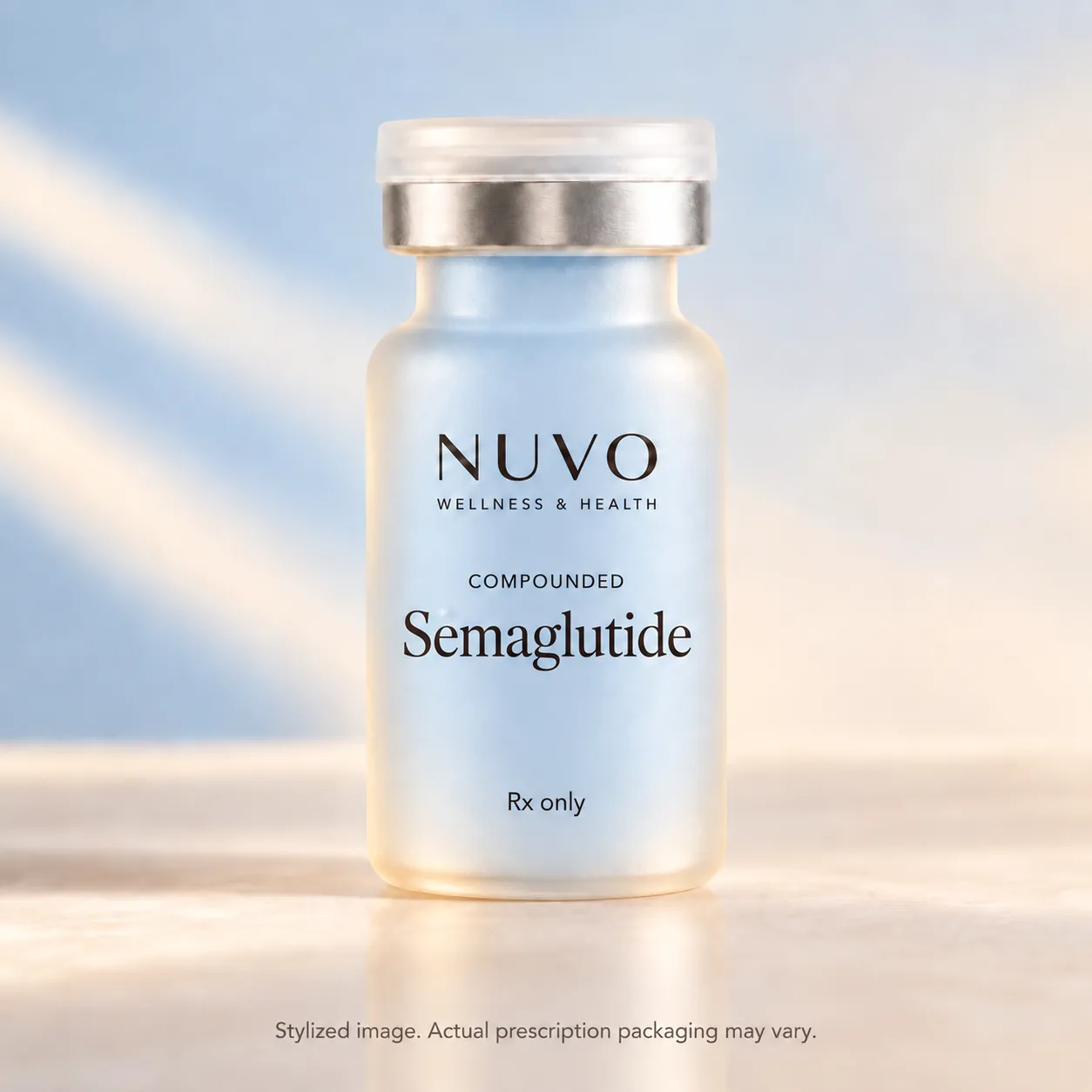
Related treatment · Compounded GLP-1
Semaglutide
$400 per vial · No membership →

Wondering if treatment is right for you?

Talk with Amanda in a complimentary virtual consultation. No membership, no obligation.